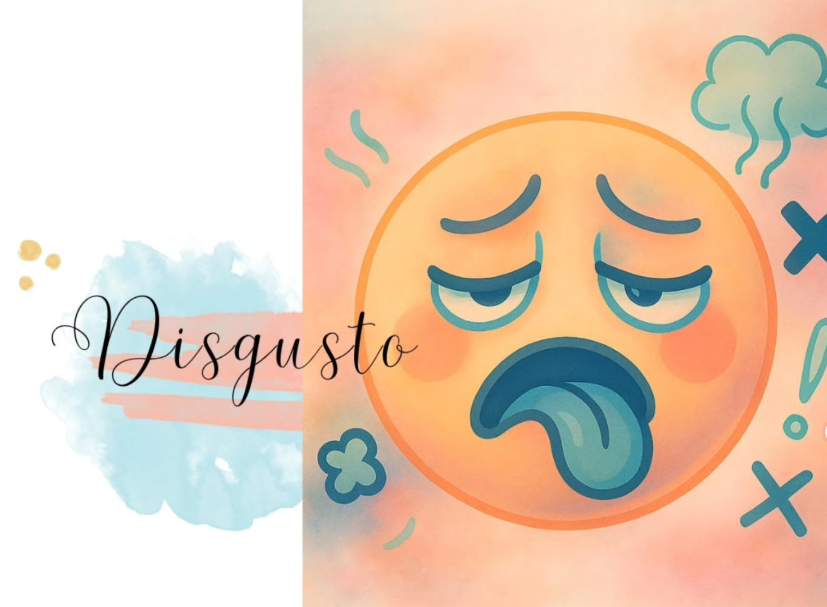
🤢 Il disgusto è un segnale importante.
Ci avverte quando qualcosa non ci piace, sia a livello sensoriale che morale. Ha una funzione protettiva, aiutandoci a prendere le distanze da ciò che potrebbe farci del male o farci sentire a disagio.
A volte però, quando questa emozione diventa troppo intensa o frequente, può cominciare a pesare sul nostro benessere. Succede, per esempio, nel Disturbo Ossessivo-Compulsivo (DOC), dove il disgusto può diventare difficile da gestire.
🌸Per questo è importante imparare ad ascoltare questa emozione con gentilezza e provare a comprenderne il messaggio, senza giudicarla.
FONTI:
American Psychiatric Association. (2013). DSM-5: Manuale diagnostico e statistico dei disturbi mentali (5ª ed.).
DeJong, P. J., & Peters, M. L. (2009). Sex and the sexual dysfunctions: The role of disgust and contamination sensitivity. In B. O. Olatunji & D. McKay (Eds.), Disgust and its disorders: Theory, assessment, and treatment implications (pp. 253–270). American Psychological Association.
Ekman, P. (1972). Emotion in the Human Face. Cambridge University Press.
Ekman, P. (1992). An argument for basic emotions. Cognition and Emotion, 6, 169–200.
Izards, C. E., & Buechler, S. (1980). Aspects of consciousness and personality in terms of differential emotions theory. In Theories of Emotion. Cambridge: Academic Press.
Olatunji, B. O., & Sawchuk, C. N. (2005). Disgust: Characteristic features, social manifestations, and clinical implications. Journal of Social and Clinical Psychology, 27, 932–962.
Rozin, P., Millman, L., & Fallon, A. E. (1986). Operation of the law of sympathetic magic in disgust and other domains. Journal of Personality and Social Psychology, 50(4), 703–712.
Siti web
https://www.paulekman.com
https://www.stateofmind.it

Lascia un commento