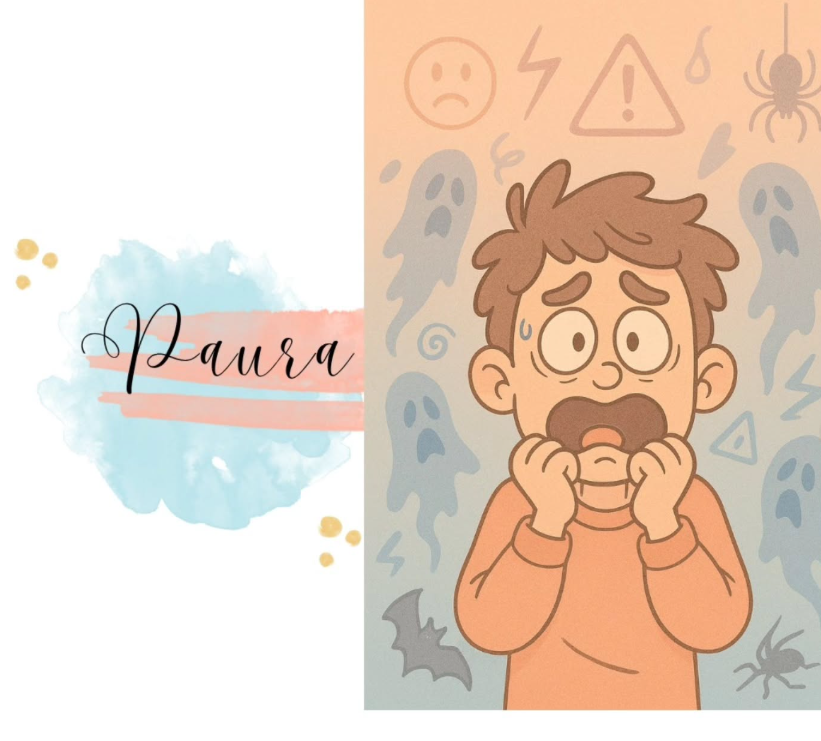
😱😨La paura ci protegge e ci prepara a reagire quando ci sentiamo minacciati. Ma quando diventa troppo intensa o dura troppo a lungo, può trasformarsi in un peso che limita la nostra vita quotidiana.
⚠️Riconoscere come si manifesta nel corpo e nella mente, capire le risposte che si attivano dentro di noi e distinguere tra paura, ansia e panico ci aiuta a gestirla con più consapevolezza.
E sapere quando la paura è diventata troppo e quando è il momento di chiedere aiuto può fare davvero la differenza.
Ricorda: non sei sol*, e ogni passo verso il benessere conta.♥️
FONTI:
American Psychiatric Association. (2013). DSM-5: Manuale diagnostico e statistico dei disturbi mentali (5ª ed.).
Ekman, P. (1972). Emotion in the Human Face. Cambridge University Press.
Ekman, P. (1977). Facial expression and emotion. In P. Siegman & S. Feldstein (Eds.), Nonverbal Behavior and Communication.
Ekman, P. (2003). Sixteen enjoyable emotions. Emotion Researcher, 18, 6–7.
Ekman, P. What is fear?
Izard, C. E. (2009). Emotion Theory and Research: Highlights, Unanswered Questions, and Emerging Issues. Annual Review of Psychology, 60, 1–25.
Slama, M. E. (2005). Emotions and Life: Perspectives from Psychology, Biology, and Evolution. Psychology & Marketing, 22(1), 97–101.
Elliot, A. J., & Maier, M. A. (2014). Color psychology: Effects of perceiving color on psychological functioning in humans. Annual Review of Psychology, 65, 95–120.
Mobbs, D., Adolphs, R., Fanselow, M. S., Barrett, L. F., LeDoux, J. E., Ressler, K., Tye, K. M., & Neuroscience, N. (2024, February 20). On the Nature of Fear. Scientific American. https://www.scientificamerican.com/article/on-the-nature-of-fear/
Mellers, B. A., Fincher, K., Drummond, C., & Bigony, M. (2013). Surprise. In Progress in Brain Research (Vol. 200, pp. 3–19). Elsevier
Siti web:
https://www.paulekman.com
https://www.stateofmind.it

Lascia un commento